










The Role of Laboratory Diagnostics in Herd Managemen
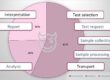
In modern herd health management, the focus of udder health has shifted from treating clinical mastitis towards prevention and monitoring of subclinical infections. Laboratory diagnostics provide the foundation for evidence-based decision-making.
Clinical mastitis causes farmers an economic loss of several hundred euros. Management improvements that address the underlying causes of infection offer considerable potential for cost savings: good cubicle, housing and milking hygiene, as well as correct feeding management and optimal cow comfort, can therefore quickly pay off. There is also potential for cost savings in the treatment of clinical cases, as many cases of mastitis do not require or should not be treated with antibiotics. In addition, certain antibiotic treatments are legally permitted only following an antimicrobial susceptibility test (TÄHAV § 13, mandatory susceptibility testing).
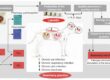
To make targeted decisions for the affected animal, knowledge of the causative pathogens and a strategic approach, e.g. using decision trees, are therefore essential.
Diagnostic Steps When Mastitis Is Suspected
Bacterial Culture of Milk
The gold standard in mastitis diagnostics is conventional bacterial culture of quarter milk samples, as identifying udder pathogens is highly relevant (Table 1). This quarter milk diagnostics approach is suitable both for individual diseased animals and for herd-level diagnostics.
Routine sampling of newly occurring clinical mastitis cases as well as suspected subclinical cases is recommended, e.g. when an increased somatic cell count is detected during the monthly milk recording (first somatic cell count above 200,000 cells/ml).
In cases of udder health problems affecting the entire herd, the main pathogens can initially be identified in this way. These provide indications as to whether new infections are acquired primarily during the milking process or in the cubicles and housing environment. Targeted adjustments can then be made in the relevant areas, e.g. in the cows’ lying areas or in the milking environment and equipment.
Automatic milking systems (milking robots) present different challenges from conventional milking parlours.
Instructions for Aseptic Milk Sample Collection
For the detection of udder pathogens, foremilk samples from each quarter should be collected. If yeast infections are suspected, however, it is advisable to collect stripping milk samples.
Aseptic milk sampling is recommended, with the teats being dry-cleaned, disinfected and milked in the correct order. The use of disposable gloves is recommended (example for sampling from the left: cleaning: RF RR LF LR; sampling: LR LF RR RF).
The sample tubes should ideally only be opened directly beneath the cow. They should be held al-most horizontally with the inside facing downwards, and neither the inside of the tube nor the lid should be touched or allowed to come into contact with the teat end in order to prevent contamination.
Sterile, securely and tightly sealable tubes (if necessary, with the addition of boric acid as a preservative) are suitable as sample containers. These should be clearly labelled with the cow ID and the respective udder quarter. The samples should be sent to the laboratory within 24 hours whenever possible. Until dispatch, the samples should be stored under refrigerated conditions.
Samples in the Laboratory
Once the samples arrive at the laboratory, milk testing includes both bacteriological and mycological examination for udder pathogens.
The milk is initially plated onto blood agar and cultured to obtain pure cultures. If the cultured colonies cannot be clearly identified based on their morphology, the pathogens are precisely identified using MALDI-TOF (matrix-assisted laser desorption ionisation time-of-flight mass spectrometry). There is also the option of testing bulk tank milk by PCR for 16 different mastitis pathogens, providing an overview of which mastitis pathogens are relevant on the farm. Mycoplasmas are not cultured in most laboratories but are detected using PCR.
The Antibiogram
Antibiograms can be performed using the broth microdilution method. In this procedure, the bacterial isolate is incubated with different concentrations of an antibiotic. After the incubation period, the antibiotic concentration at which bacterial growth is inhibited is determined. This concentration is referred to as the minimum inhibitory concentration (MIC). However, the MIC initially represents only an in vitro value. To derive a clinically relevant interpretation, it is classified into the categories S (susceptible), I (intermediate) or R (resistant) using so-called clinical breakpoints.
These clinical breakpoints take various factors into account, such as pharmacokinetics (drug concentration in the animal), pharmacodynamics (the relationship between drug concentration and its effect on the pathogen), and treatment outcomes in clinical studies.
Table 1: Key Mastitis Pathogens
| Pathogen | Problem Areas | Remarks |
| Staphylococci | ||
| Staph. aureus | Cow-associated, milking | Special culture media |
| Coagulase-negative staphylococci (CNS) | Environment-associated | Teat skin |
| Streptococci (Sc.) | ||
| Sc. uberis | Environment-associated / cow-associated | Passageways, bedding, teat skin |
| Sc. agalactiae (ScB), „yellow galactia“ | Cow-associated | Highly contagious |
| Sc. dysgalactiae (ScC) | Environment-associated / cow-associated | |
| coliforme Erreger | ||
| E. coli | Environment-associated | |
| Klebsiella spp. | Environment-associated | |
| Enterococcus spp. | Environment-associated | |
| andere coliforme Erreger | Environment-associated | |
| Sonstige | ||
| Trueperella pyogenes | Environment-associated | |
| Corynebacterium bovis | Cow-associated | Teat skin, skin flora |
| Bacillus cereus | Environment-associated | Toxin producer |
| Yeasts | Environment-associated | Detectable in stripping milk |
| Mycoplasma bovis/ spp. | Cow-associated | PCR-detection! |
| Serratia spp. | Environment-associated | Teat dips! |
| Pseudomonas spp. | Environment: moisture | Milking equipment cleaning, teat dips |
| Prototheca spp. | Environment: moisture, algae | Milking equipment cleaning |
Hygiene and Management Diagnostics
Assessing Milking Hygiene
So-called cow-associated pathogens are transmitted from cow to cow during the milking process.
The typical example is Staph. aureus, but other pathogens can also be spread via the milking clusters or milker’s hands if intermediate disinfection is inadequate (e.g. Sc. uberis). Particularly with automatic milking systems, a specific milking order to prevent the spread of pathogens cannot be guaranteed, making adequate intermediate disinfection of utmost importance. The quantity and temperature of the disinfectant used for intermediate disinfection must therefore be checked regularly to ensure that they are still correctly set.
To monitor the effectiveness of intermediate disinfection, the milking clusters in particular are routinely examined using swab samples. These samples are taken before and after disinfection. Here too, it is important to ensure that samples are collected correctly to prevent possible contamination from the outside of the milking clusters.
Instructions for Swab Sample Collection
Milking Clusters
One sample is taken from the shaft of the teat liner immediately after milking, followed by a second sample after intermediate disinfection has been carried out.
When wet-chemical intermediate disinfection is performed, an exposure time of at least 30 seconds must be observed between disinfection and sample collection to ensure sufficient efficacy of the disinfectant. To prevent test results from being distorted by possible disinfectant residues, the second sample should be collected using the wet-dry swab method (in accordance with DIN 10113-1): a standard dry swab without medium is moistened with NaCl and, after sampling, stored in a neutralisation medium to inactivate any residual disinfectant.
If intermediate disinfection is performed thermally, the teat liners must be allowed to cool sufficiently before sampling.
Following correctly performed intermediate disinfection of the milking equipment, cow-associated mastitis pathogens, such as Staphylococcus aureus or Streptococcus agalactiae, should no longer be detectable on the surface of the teat liners.
Cleaning Brushes
Sampling should only be carried out after milking has been completed and the brush has dried sufficiently over the moisture removal strips. The brush arm is pulled to the side to allow better access. A swab is then drawn once along the base of the brush. In addition, each brush should be swabbed at several points, moving from the base towards the tips of the bristles, to ensure representative sampling.
A positive result after disinfection is a warning sign that the disinfectant is not sufficiently effective.
Rinse Water Samples
Testing the rinse water provides information on the cleaning and disinfection efficiency of the entire milking system. The quality of the rinse water should therefore be checked. This is particularly important when the farm uses well water, which should be regularly tested for its suitability as cleaning water.
As part of the new water profile “Drinking Water Profile – Water Analysis QM-Milk”, the microbiological parameters Escherichia coli, coliform bacteria, enterococci and total viable counts at 20°C and 36°C are analysed, along with the physicochemical parameters pH, total dissolved salts, electrical conductivity, chemical oxygen demand (COD), ammonium, nitrite, nitrate, phosphate, sulphate, chloride and iron, as well as sensory properties such as odour.
Before microbiological sampling, the outlet opening and, where applicable, the collection basin must be sterilised. The water should be allowed to run for approximately three minutes, and the sample should be collected under strictly sterile conditions with proper handling of the sample container to prevent contamination. The sterile container should be filled to approximately five-sixths of its capacity, immediately sealed tightly and sent to the laboratory as quickly as possible.
Microbiological findings showing elevated total viable counts (TVC at 20°C and 36°C), as well as the detection of Escherichia coli, coliform bacteria or enterococci, should be regarded as relevant indicators of hygiene deficiencies and potential faecal contamination.
The total concentration of dissolved salts reflects the overall concentration of dissolved ions (Mg, Ca, NaHCO₃, Cl, S) and serves as a parameter for as-sessing water quality. Electrical conductivity correlates significantly with electrolyte concentration. Elevated conductivity often indicates the presence of sodium, potassium or chloride. This can also be an indication of faecal contamination.
Nitrite and nitrate levels are particularly relevant in intensively farmed agricultural regions, as nitrogen compounds frequently enter groundwater in the form of nitrate.
An elevated chemical oxygen demand (COD) indicates contamination of the water with organic compounds and may point to secondary contamination from humic substances, wastewater or feed residues.
Elevated iron concentrations in the water can cause precipitates and functional problems and may reduce the efficacy of medicinal products through complex formation. Other parameters, such as pH, ammonium, phosphate and chloride, provide additional information on the chemical composition and potential contaminants in the rinse water. Sensory properties such as odour also play a role.
In summary, this profile provides a comprehensive overview of the microbiological and chemical quality of the water in the milking system. Pipelines should also be considered as a potential source of contamination during sampling, particularly when Pseudomonas spp. and/or Serratia spp. are detected frequently on farms.
Biofilms in the pipelines can exacerbate the situation, as they can cause microorganisms to be released intermittently rather than continuously, potentially resulting in sudden, substantial spikes in infections. Repeated testing at different points throughout the milking system may therefore be advisable.
Teat Dips as a Source of Contamination
There are increasing problems with resistant microorganisms in lactic acid-based teat disinfectants. Serratia spp. in particular appear to be pathogens that can withstand the disinfectants used in pre- and post-dipping products.
Laboklin offers the option of testing disinfectants for sterility (disinfectant testing, hygiene request form).
Specific Considerations for Automatic Milking Systems (AMS)
The transmission of cow-associated pathogens in conventional milking parlours can often be attributed to shortcomings in general hygiene and teat cleaning. In automatic milking systems, however, the focus is on the technology. The challenge for herd health veterinarians is to assess these systems as well, which requires an understanding of how they function. The extensive animal data provided by the milking robot or other smart farming technologies can be very useful for early detection. However, sometimes it is also the traditional bacteriological swab samples that provide the crucial insights.
Housing Hygiene and Cubicle Hygiene
“As you make the cow’s bed, so shall she lie.” When it comes to udder health, the lying surface is of crucial importance: it should be clean and dry. Contaminated lying areas and walkways, as well as unsuitable bedding, can promote infections, for example with Sc. uberis, E. coli and Klebsiella spp. These so-called “environmental pathogens” infect the udder between milking sessions.
However, an increased incidence of clinical mastitis with detection of such pathogens may not only indicate inadequate cubicle and housing hygiene, but also impaired immunity, metabolic fluctuations, inconsistent feeding or heat stress. If necessary, further investigations are therefore recommended (including blood tests, feed and drinking water analyses, and climate assessments).
Practical Takeaways
Udder health is a complex aspect of herd management in a dairy herd. In addition to diagnostics relating to the udder and the environmental factors discussed, the immune system and metabolism must also be taken into account to ensure a healthy start to lactation. A sustainable improvement in udder health can be achieved particularly effectively through a combination of targeted laboratory diagnostics, consistent hygiene measures and a holistic approach to the individual dairy cow and the herd as a whole.
Swanhild Wagenfeld, Doris Bismarck, Hannah Lang
Our Key Services on This Topic
- Bacteriology, aerobic/anaerobic, including antibiogram
- Milk (cattle) – bacteriology including antibiogram, mycology; milk from 1/4 or all 4 quarters
- Problem Mastitis (PCR) – PCR detection of 16 mastitis pathogens (including mycoplasmas and yeasts) and the β-lactamase gene (no antibiogram)
- Drinking Water Profile – Water Analysis QM-Milk (collect sample aseptically) – coli, coliform bacteria, enterococci, total viable count (TVC) at 20°C and 36°C, pH, total dissolved salts, conductivity, COD, ammonium, nitrite, nitrate, phosphate, sulphate, chloride, iron, odour
- Disinfectant testing