










The problem of antibiotic resistance
Antimicrobial resistance (AMR) represents a serious threat to both animal and public health.
The discovery of new antibiotic classes has been rare over recent decades (1). It has even been estimated that, without countermeasures, up to 10 million people per year could die from drug-resistant infections by 2050, exceeding the number of deaths caused by cancer (2).
Against this background, alternative treatment strategies such as individually produced, herd-specific vaccines (autovaccines) are becoming increasingly important. At European level, the promotion of alternatives to antimicrobial veterinary medicinal products has long been discussed as a key approach to reducing antibiotic use (3).
Historically, autovaccines already experienced an initial peak in use at the beginning of the 20th century and, even before the discovery of the first antibiotic, penicillin by Alexander Fleming, were introduced by Sir Almroth Edward Wright (4–6).
Wright developed individually prepared, heat-inactivated vaccines for the treatment of chronic staphylococcal infections, which were initially controversial (6).
Indications and efficacy of autovaccines
Autovaccines are used for the treatment of chronic and recurrent infections in which conventional therapeutic approaches have failed, or antibiotic treatment is not possible due to resistant pathogens.
As an individual therapy, autovaccines aim to specifically stimulate the immune system of a single animal against the specific pathogen isolated from the site of infection. Autovaccines are therefore both pathogen- and patient-specific. They are not suitable for the treatment of acute diseases (6).
The literature also describes further indications for autovaccines, such as use in cases of insufficient innate immune response or when suitable commercial vaccines are not available (6).
Specific examples include the treatment of otitis externa, dermatitis, sinusitis, pharyngitis, and mastitis, involving both Gram-positive and Gram-negative pathogens (6).
In dogs, autovaccines are particularly described for pyoderma and otitis externa and media (6). Mayr et al. report complete healing in 43.7% of dogs with pyoderma (7). Klein et al. observed a cure rate of 49% and slight improvement in 18% for the same indication following autovaccine treatment (8)
In the same study, treatment success rates for chronic diarrhoea in dogs, cats, and horses ranged between 61–85%, and for chronic rhinitis in cats from 70% (8). In horses, autovaccines can also be used in cases of free faecal water (9).
In another study on idiopathic recurrent pyoderma in dogs, administration of a Staphylococcus pseudintermedius-based autovaccine in addition to antibiotic therapy resulted in significantly improved pyoderma scores compared with the antibiotic-only group (10). Success rates for this indication in further studies between from 77–88% (11–13).
Abscesses in rabbits caused by highly virulent S. aureus strains decreased in size within two weeks of autovaccine treatment, although they were not completely eliminated (14).
Unlike conventional vaccines, autovaccines do not contain adjuvants. The use of immunomodulators to enhance the cellular immune response prior to administration of autovaccines for staphylococcal infections has been described (6).
Mechanisms of action of autovaccines
Autovaccines do not act through direct elimination of the pathogen, but rather through a general stimulation of the immune system, enabling the host to eliminate the pathogen itself.
Sir Almroth Edward Wright already hypothesised an increase in phagocytic activity following autovaccine therapy (4, 5). Although the exact mechanism of action has not yet been fully clarified, it is assumed that the innate immune system is activated first, leading to a non-specific immune response and the recruitment of phagocytic defence cells such as macrophages to the site of infection.
This is followed by activation of the adaptive immune response, in which T and B cells are involved and both cellular and humoral defence mechanisms are triggered (6, 15). This distinguishes autovaccines from conventional vaccines, which primarily induce a humoral immune response (6).
Furthermore, it has been shown that autovaccine treatment increases the production of pro-inflammatory cytokines, thereby enhancing overall immune activity (16). Orally administered autovaccines, for example in cases of bacterial diarrhoea or other gastrointestinal infections, also lead to an increase in secretory antibodies (IgA), which protect the intestinal epithelium from bacterial adhesion and thereby strengthen the mucosal barrier (17, 18).
Interestingly, autovaccines may also influence the bacterial population targeted within the host. In one study, strains with a reduced genetic repertoire for survival in the host predominated after treatment (19). This may be advantageous for therapy.
Autovaccines at Laboklin
Autovaccines at Laboklin can be produced for companion animals that are not used for food production. Farm animals intended for food production are excluded.
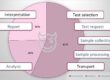
The exact ordering process for an autovaccine consists of several steps, including the initial bacteriological examination, the required documentation, as well as manufacturing and dispatch (Fig. 1).
Autovaccines should not be administered to young animals under one year of age.
The routes of administration include injection vaccines for chronic skin or ear infections, inhalation vaccines for chronic respiratory infections, oral (swallow) vaccines for chronic diarrhoea, and combination vaccines with both oral and injectable components for infections of the urogenital tract.
An overview shows which autovaccine types are most commonly produced for the respective animal species depending on the clinical presentation (Fig. 2).
The administration period for the different autovaccines is usually 3–4 weeks. A prerequisite for production is completing the Laboklin prescription forms and, in Germany, the submission of the pharmacy authorisation for the veterinary practice’s in-house pharmacy.
An autovaccine can be produced when no commercially available vaccines exist against the pathogen. Regulation (EU) 2019/6 on veterinary medicinal products governs the manufacture, prescription, and supply of autovaccines at EU level (20). It also states that the attending veterinarian must ensure that the isolated pathogen is administered as an autovaccine only to animals belonging to the same epidemiological unit or, if at different locations, to those with a verified epidemiological link (21).
Once the legal requirements are fulfilled, the autovaccine is produced at Laboklin. To ensure quality and safety, this includes not only inactivation of the pathogens and adjustment of the microbial concentration, but also a two-week sterility control in accordance with the European Pharmacopoeia (22).
A maximum of four pathogens can be included in a single autovaccine. In general, autovaccines can be produced for aerobically growing bacteria, with the exception of aerobic spore-forming bacteria.
Obligate anaerobic bacteria, viruses, and fungi are also excluded.
Before manufacturing an autovaccine, it should be assessed whether the bacteria isolated in the microbiological examination are potentially pathogenic for the specific anatomical site. An autovaccine targeting commensal flora is not useful.
The six most common pathogens for each autovaccine type are summarised in an overview (Fig. 3). In cases of recurrence, a follow-up vaccine can be produced within one year using bacteria obtained from the microbiological examination. In some cases, a repeat bacteriological analysis is useful to determine the current spectrum of pathogens.
In particular, pyoderma cases have an expected recurrence rate of around 20% (7, 8).
An autovaccine can also be used as an adjunct to antibiotic therapy. However, concurrent antibiotic therapy is not recommended in the case of oral (swallow) vaccines. This is because antibiotic treatment may alter the gut microbiota and mucosal immune homeostasis, potentially reducing the effectiveness of the IgA antibody response induced by the autovaccine.
Adverse drug reactions associated with autovaccines are relatively rare. However, redness and swelling at the injection site may occur.
Systemic reactions such as fever, increased respiratory rate, and apathy can also be seen (6).
It should be noted that underlying diseases may influence the effectiveness of the autovaccine.
Conclusion
Autovaccines represent an important alternative or adjunct to antibiotic therapy in chronic diseases of companion animals, particularly in the context of increasing antimicrobial resistance.
Johannes Kupke, Martina Krapf
Services related to this topic:
- Bacteriology (aerobic)
- Oral vaccine
- Injectable vaccine
- Combination vaccine
- Inhalation vaccine
Further literature:
-
Ulrike Holzgrabe. Antibiotika-Entwicklung gestern und heute. Chemother J. 2004;(13):142–7.
-
O’Neill J. Antimicrobial Resistance: Tackling a Crisis for the Health and Wealth of Nations. [Internet]. 2014. Available from: https:// amr-review.org/sites/default/files/AMR%20Review%20Paper%20-%20Tackling%20a%20crisis%20for%20the%20health%20and%20 wealth%20of%20nations_1.pdf
-
The European Medicines Agency. Reflection paper on promoting the authorisation of alternatives to antimicrobial veterinary medicinal products in the EU.
-
Wright AE. A Lecture ON THERAPEUTIC INOCULATIONS OF BACTERIAL AND THEIR PRACTICAL EXPLOITATION IN THE TREATMENT OF DISEASE: Delivered at the Medical Graduates’ College and Polyclinic. Br Med J. 1903;1(2210):1069–74. doi:10.1136/bmj.1.2210.1069 Cited in: PubMed; PMID 20760879.
-
Wright AE D On the action exerted upon the Staphylococcus pyrogenes by human body fluids and an elaboration of protective elements in the human organism in response to inoculation of a Staphylococcus vaccine. Proc R Soc Lond. 1904;(74):147–59.
-
Stefania Giedrys-Kalemba, Danuta Czernomysy-Furowicz, Karol Fijałkowski, Joanna Jursa-Kulesza. Chapter 19 – Autovaccines in Individual Therapy of Staphylococcal Infections. Pet-To-Man Travelling Staphylococci, Academic Press,. 2018;Pages 253-264, https://doi.org/10.1016/B978-0-12-813547-1.00019-4.
-
Mayr, A., J. Seimairhund H. Schels. Erfahrungen mit einer Autovakzine-Therapie bei der Staphylokokken-Pyodermie des Tierärztliche Umschau. 1987;(42):112–8.
-
Babette Ursula Klein, Anton Heusinger, Elisabeht Müller. Therapieerfolg durch Anwendung von Autovakzinen: bei verschiedenen Krankheistbildern von Hunden, Katzen und Pferden – Erfahrungen aus der Praxis. Kleintiermidizin 5/99. 1999;192–6.
-
Ann-Kathrin Schieder, Ronnie Gueta. Laboklin aktuell – Verdauungsstörungen beim Pferd. 2020.
-
Curtis CF, Lamport AI, Lloyd DH. Masked, controlled study to investigate the efficacy of a Staphylococcus intermedius autogenous bacterin for the control of canine idiopathic recurrent superficial pyoderma. Vet Dermatol. 2006;17(3):163–8. doi:10.1111/ j.1365-3164.2006.00512.x Cited in: PubMed; PMID 16674730.
-
DeBoer DJ, Moriello KA, Thomas CB, Schultz Evaluation of a commercial staphylococcal bacterin for management of idiopathic recurrent superficial pyoderma in dogs. Am J Vet Res. 1990;51(4):636–9. Cited in: PubMed; PMID 2327626.
-
Pukay BP. Treatment of canine bacterial hypersensitivity by hyposensitization with Staphylococcus aureus bacterin-toxoid: Journal of the American Animal Hospital Association; 21; 479-83;
-
Becker AM, Janik TA, Smith EK, Sousa CA, Peters BA. Propionibacterium acnes immunotherapy in chronic recurrent canine pyoderma. An adjunct to antibiotic therapy. J Vet Intern 1989;3(1):26–30. doi:10.1111/j.1939-1676.1989.tb00325.x Cited in: PubMed; PMID 2647969.
-
Meulemans G, Hermans K, Lipinska U, Duchateau L, Haesebrouck F. Possible protective effect of an autovaccine against high virulence Staphylococcus aureus in a rabbit skin infection model. Proceedings of the 9th World Rabbit Congress; 2008 June 10-13; Verona, Italy, Pathol. Hyg;. 2008;p. 1019-23.
-
Callaway TR, Lillehoj H, Chuanchuen R, Gay CG. Alternatives to Antibiotics: A Symposium on the Challenges and Solutions for Animal Health and Production. Antibiotics (Basel). 2021;10(5). doi:10.3390/antibiotics10050471 Cited in: PubMed; PMID 33918995.
-
Szkaradkiewicz A, Karpiński TM, Goślińska-Pawłowska O, Szkaradkiewicz AK, Giedrys-Kalemba Cytokine Response in Autovaccine-Treated Patients with Chronic Staphylococcus Aureus Infections. Eur J Inflamm. 2013;11(1):103–10. doi:10.1177/1721727X1301100110
-
Flasshoff HJ. Mikrobielle Aspekte bei Darmerkrankungen. Prakt. 1991;(6):494–502.
-
Baljer, G.,F. Hinsch, B.Mayr. Klinische Erfahrungen mit der zwingerspezifischen E.- coli-Schluck-impfung bei Hunden. Tierärztl. 1990;(18):65–8.
-
Calland JK, Pesonen ME, Mehat J, Pascoe B, Haydon DJ, Lourenco J, Lukasiewicz B, Mourkas E, Hitchings MD, La Ragione RM, Hammond P, Wallis TS, Corander J, Sheppard SK. Genomic tailoring of autogenous poultry vaccines to reduce Campylobacter from farm to fork. NPJ Vaccines. 2024;9(1):105. doi:10.1038/s41541-024-00879-z Cited in: PubMed; PMID 38866805.
-
Verordnung (EU) 2019/6 des Europäischen Parlaments und des Rates vom Dezember 2018 über Tierarzneimittel und zur Aufhebung der Richtlinie 2001/82/EG (ABl. L 4 vom 7.1.2019, S. 43). [Internet]. Available from: https://eur-lex.europa.eu/eli/reg/2019/06/ oj?utm_source=chatgpt.com
-
Manual of Autogenous Vaccines (AV);
-
Council of Europe, European Directorate for the Quality of Medicines & HealthCare (EDQM). European Pharmacopoeia (Ph. ) 12th edition. Strasbourg, France: Council of Europe; 2025.