










Introduction: From diagnosis to decision-making
Environmental allergy, referred to as canine atopic dermatitis (cAD) in dogs and feline atopic skin syndrome (FASS) in cats, is a chronic, multifactorial condition characterized by an abnormal immune response to environmental
allergens. In sensitized patients, exposure to these allergens triggers an exaggerated immune reaction leading to cutaneous inflammation and pruritus, which determine the clinical expression and progression of the disease.
From a practical perspective, the management of AD relies on two complementary therapeutic approaches. The first is the control of inflammation and pruritus, using antipruritic and anti-inflammatory therapies. This is essential to maintain the patient comfortable, prevent self-trauma and secondary infections, and ensure adequate quality of life.
The second approach targets the underlying pathophysiology of the disease. Allergen-specific immunotherapy (ASIT) aims to modulate the immune response by inducing tolerance to the relevant allergens. ASIT works by “re-educating” the immune system, reducing its tendency to overreact upon allergen exposure and, consequently, decreasing the inflammatory cascade over time.
Understanding these complementary pathways is essential: symptomatic therapy provides immediate and ongoing control, whereas ASIT represents the only strategy capable of modifying the course of the disease.
When to start ASIT
Before considering allergen-specific immunotherapy (ASIT), a clear and robust diagnosis of atopic dermatitis (AD) is essential. Importantly, AD remains a clinical diagnosis, based on compatible history, distribution of lesions and pruritus, and—critically—the exclusion of other pruritic diseases.
It is equally important to allow sufficient time to understand how the disease behaves in each individual patient, which typically requires several months of clinical follow-up.
During this period, the clinician should aim to:
- Achieve good control of inflammation and pruritus
- Resolve and prevent secondary infections
- Implement appropriate multimodal therapy (e.g. topical therapy, flea control, antipruritic/anti-inflammatory treatment)
-

-
Fig. 1: Companion animal in a natural environment, illustrating
improved quality of life under successful long-term management of atopic dermatitis.
Picture credits: ChatGPT

-
-
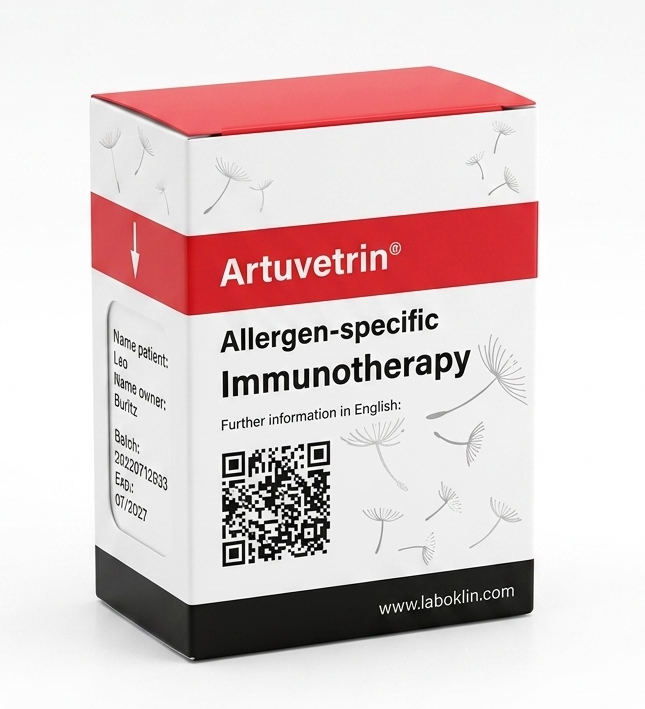
Figure 2: Artuvetrin® used for allergen-specific immunotherapy in clinical practice
Picture credits: LABOklin
-
-
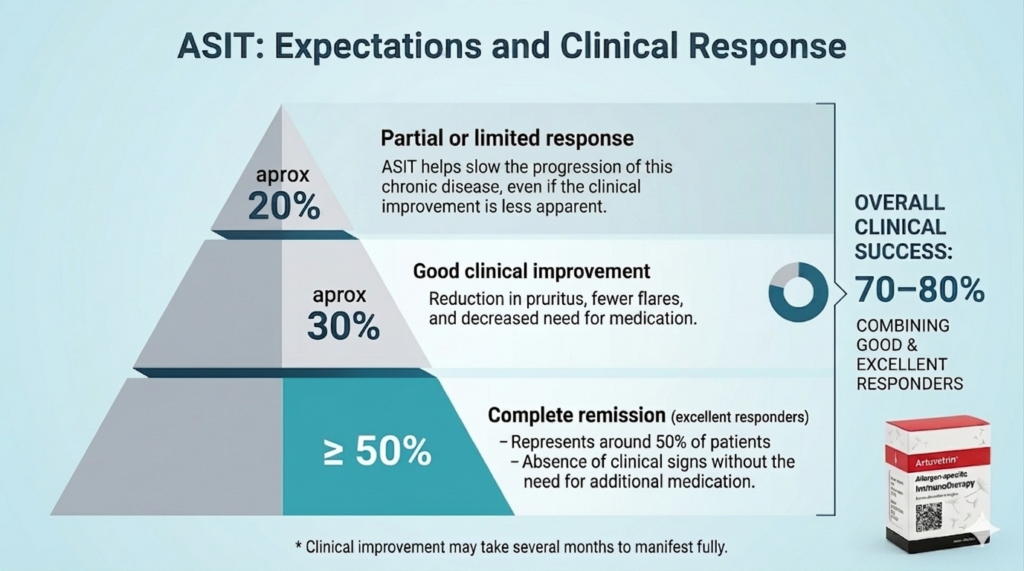
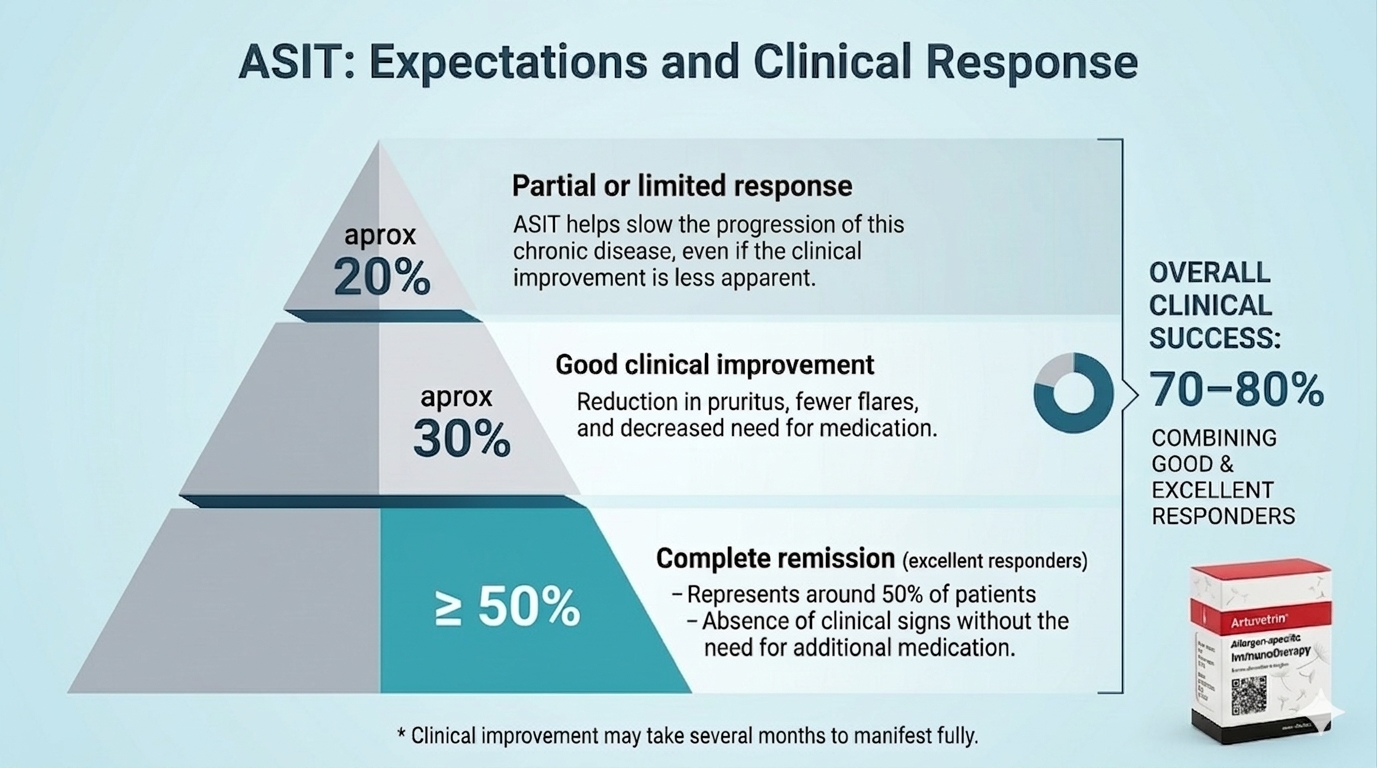
Figure 3: Clinical response rates to allergen-specific immunotherapy (ASIT) and distribution of treatment outcomes
Picture credits: Dr. Carmen Lorente (ChatGPT)
This phase is not only therapeutic but also allows the clinician to define, for each individual patient:
- The baseline severity of the disease
- The minimum treatment required to maintain control
- The pattern and frequency of flares
Once the disease has been appropriately characterized, ASIT should be considered, as it is recommended in all patients with confirmed environmental AD, as the disease is typically
progressive, with increasing severity and frequency of flares over time.
Early initiation is desirable once diagnosis is secured, as the potential for long-term benefit is often greater in earlier stages and the likelihood of reducing or even eliminating the need for medication is higher when ASIT is introduced sooner.
ASIT can also be effective in chronic or severe cases, although in these patients the goal is usually improved control and reduced medication rather than complete remission.
Ultimately, the key is to balance early intervention with adequate diagnostic certainty and clinical characterization, ensuring appropriate case selection and meaningful evaluation of response.
Allergy testing: not for diagnosis, but for treatment design
Once the decision to initiate ASIT has been made, allergy testing is performed not to diagnose AD (allergy is a clinical diagnosis; see above) but to identify relevant allergens for inclusion in the immunotherapy formulation.
Both serological IgE and intradermal testing are suitable for this purpose. In clinical practice, serological testing offers clear advantages in terms of convenience and standardization.
However, the quality and specificity of the test are critical, as they directly influence allergen selection and, consequently, treatment efficacy.
High-quality assays should:
- Specifically detect allergen-specific IgE (avoiding cross-reactivity with IgG)
- Address the issue of cross-reactive carbohydrate determinants (CCDs), which can lead to clinically irrelevant false-positive results
The use of assays based on the high-affinity IgE receptor (FcεRIα), together with CCD detection and blocking systems, significantly improves the accuracy of allergen identification and supports a more precise and clinically relevant ASIT formulation.
Routes of administration of ASIT
Subcutaneous immunotherapy (SCIT) has traditionally been the standard route of administration. Over time, alternative routes have been explored with the aim of improving efficacy, accelerating the onset of clinical response, or facilitating administration.
The main available routes are outlined below.
Subcutaneous immunotherapy (SCIT): the classical route
Subcutaneous immunotherapy remains the most widely used and best-supported route in clinical practice.
It is typically introduced through a progressive induction phase, followed by maintenance therapy. With current protocols such as Artuvetrin®, induction is straightforward and allows reaching the full maintenance dose within the first three months of treatment.
This approach offers a well-established safety profile, flexibility for individual adjustment and extensive clinical experience. For these reasons, SCIT remains the preferred first-line approach in most patients.
Accelerated subcutaneous protocols: rush and cluster approaches
Accelerated protocols aim to shorten the time nee-ded to reach maintenance.
Rush immunotherapy (RIT) involves administering multiple escalating doses over a short period, often within a single day. During this process, the cumulative allergen dose within a single day exceeds the standard maintenance dose, which contributes to a higher risk of adverse reactions.
For this reason, RIT requires close monitoring and is typically performed in a hospital setting.
Cluster protocols group injections into one or a few sessions, allowing faster progression to maintenance without exceeding the standard dose. Although published evidence is limited, clinical experience suggests that this approach may be a practical alternative in selected cases without the need for hospitalization.
Sublingual immunotherapy (SLIT): an alternative, but with less evidence
Sublingual immunotherapy has been proposed as a non-invasive alternative administered daily via the oral mucosa. While some studies report clinical improvement, the available evidence is limited compared to SCIT, and its use is generally restricted to selected cases.
Intralymphatic immunotherapy (ILIT): targeted delivery with faster onset potential
Intralymphatic immunotherapy delivers allergens directly into lymph nodes, enabling direct antigen presentation. This targeted delivery allows direct antigen presentation, using lower allergen doses than conventional subcutaneous protocols and potentially accelerating the onset of clinical response.
This approach aims to enhance immune modulation, with studies suggesting a safe and faster onset of clinical effect. For optimal efficacy, ILIT should be performed under ultrasound guidance.
Practical message
The best route is not simply the newest one, but the one that best combines scientific support, safety, feasibility, owner adherence and conformity with the registered treatment protocol. For most patients, subcutaneous immunotherapy remains the most reliable and widely applicable approach, while alternative routes may be considered in selected cases. These alternative approaches are generally used off-label and should be supported by available scientific evidence, with preference given to treatments in accordance with the registered indications of the product.
What to expect: defining treatment success
One of the most important aspects of ASIT success is setting realistic and appropriate expectations.
ASIT does not produce an immediate effect. The immune system requires time to adapt, and clinical improvement may take up to 12 months or longer. For this reason, treatment should be maintained consistently before evaluating its efficacy.
Treatment response can be understood at different levels:
- Complete remission (excellent responders)
Absence of clinical signs without the need for additional medication. This outcome is not exceptional and may be achieved in a substantial proportion of patients (around 50%) particularly when ASIT is introduced early and protocols are followed correctly. - Good clinical improvement
Reduction in pruritus, fewer flares, and decreased need for medication. This represents a large proportion of cases and is often considered a successful outcome in daily practice. - Partial or limited response
Less evident improvement, although ASIT may still contribute to better long-term control. In some patients, it may also help slow the progression of this chronic disease, even if the clinical improvement is less apparent.
Overall, when combining excellent responders and patients with meaningful clinical improvement, ASIT achieves clinical success in approximately 70–80% of cases, potentially higher with good compliance.
The importance of compliance and long-term management
The most common cause of perceived treatment failure is premature discontinuation or inadequate adherence to the protocol.
Because ASIT requires time to modulate the immune response:
- Early discontinuation prevents its effect from developing
- Inconsistent administration reduces efficacy
- Poor clinical control may lead to the incorrect assumption that ASIT is ineffective
Appropriate symptomatic and proactive therapy should therefore be maintained as long as clinical signs are not fully controlled.
Evolution over time: adapting treatment to response
In patients responding to ASIT, clinical evolution should guide therapeutic decisions.
Over time:
- Flare frequency and severity decrease
- Medication requirements are progressively reduced
- Treatment can be adjusted to the minimum effective level of control
Importantly, the ASIT dose is generally maintained unchanged, while symptomatic therapy is adjusted. The intensity of this therapy should not be predefined, but adapted dynamically to the patient’s clinical evolution. This reflects the goal of ASIT: not only to control clinical signs, but to modify disease progression and reduce long-term treatment burden.
Clinical tip: How to explain ASIT to owners in practice
When introducing ASIT, clear communication is essential to ensure long-term compliance and treatment success. The following three messages are key:
- “This is a long-term treatment, not a quick solution”
ASIT does not act immediately. The immune system requires time to adapt, and the full effect may take up to 12 months or longer.
The goal is not rapid improvement, but long-term disease control.
- “We will continue other treatments while ASIT starts working”
Owners should understand that antipruritic and anti-inflammatory treatments are necessary to maintain comfort and will be adjusted progressively according to response, rather than discontinued at the start.
- “Success does not always mean stopping all medication”
Success can include:
-
- Less itching
- Fewer flare-ups
- Reduced need for medication
Even without complete remission, improving disease control and quality of life is a successful outcome.
Conclusion
Allergen-specific immunotherapy is the only treatment capable of modifying the course of atopic dermatitis. Its success depends not only on correct allergen selection and protocol choice, but also on timing, individualization, and effective communication with the owner.
In clinical practice, ASIT is an important part of the long-term management of atopic dermatitis, and the key lies in its optimal implementation for each patient.
Carmen Lorente-Méndez
LABOKLIN Services
- Allergen-specific IgE testing (FcεRIα-based assays)
- Pax complete with allergen extracts and molecular components
- CCD blocking to avoid false-positive results
- Individualized ASIT formulations
- Support in interpretation and treatment planning
Suggested References
-
Mueller RS. A systematic review of allergen immunotherapy in canine AD and FASS. J Am Vet Med Assoc. 2023;261(S1): S30–S35.
-
Fennis EEM, van Damme CMM, Schlotter YM, Sinke JD, Leistra MHG, Bartels RT, Broere F. Efficacy of subcutaneous allergen immunotherapy in atopic dogs: A retrospective study of 664 cases. Vet Dermatol. 2022 Aug;33(4):321-e75. doi: 10.1111/vde.13075.
-
Fischer NM, Rostaher A, Favrot C. A comparative study of subcutaneous, intralymphatic and sublingual immunotherapy for the long-term control of dogs with nonseasonal atopic dermatitis. Vet Dermatol. 2020; 31:365–e396.